
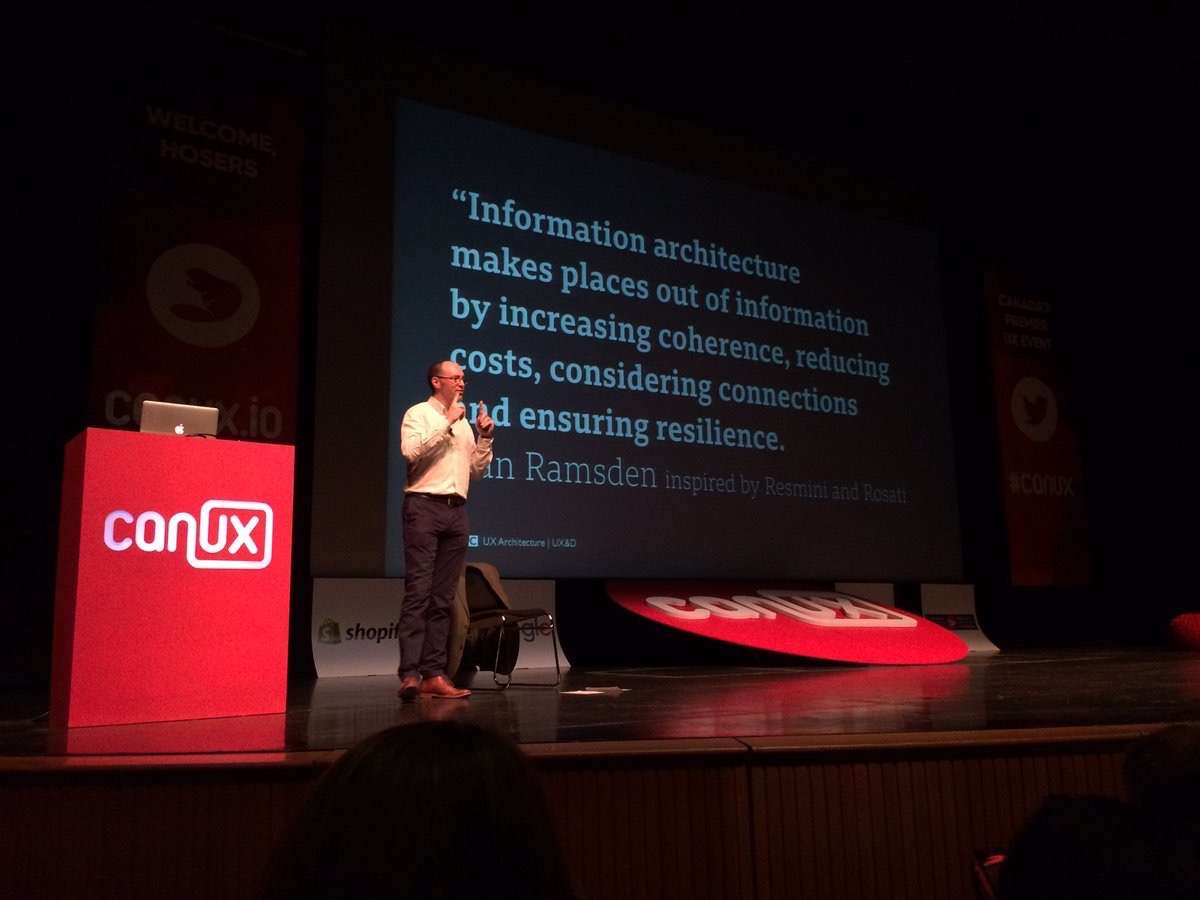
Dan Ramsden is the Creative Director for User experience architecture at the BBC. He designs experiences for a living. He’s quick to note, though, that everyone does that.
Dan leads a team of information architects who are committed to making the BBC’s tools, content and experiences more meaningful and connected. This sounds like a hard task, considering the rich history and diverse user groups the BBC serves. So I was really interested to learn how Dan’s team manages that process.
Curious enough to ask the organizers of Innovation Explorer, an event in Sofia where Dan will be presenting in February, for an interview.
From theater to information archi tecture
Confession: I’m a theater geek. This is one of the reasons why I wanted to talk to Dan. He used to work for Dead Earnest Theatre – a company that used live performance techniques for teaching, training and behavioral change. I was curious to hear what are the common elements between leading UX at an international media organization and serving as manager for an interactive theatre company.

According to Dan, the two things are actually pretty similar. Both designers and artists “can help their audience make sense of things.” Information architecture does it through the intentional arrangement of design elements. The end goal here is “to not just add to the efficiency and resilience of a system but also contribute to the meaning – the connections and coherence that are built into the design.”
The same is true in theatre: “There was always an intention behind the creative work. My whole career has been about doing the best job I can to, in the words of Jared Spool “render my intent” while leaving enough room and creativity for the audience to make their own meaning from it.”
From toddlers to elders – research has the answers
I wanted to learn how does one help the audience make sense of things when the audience is as diverse as the one of the BBC? The media virtually serves everyone from the 3-year-olds born with a touchscreen device at hand to my mom who, bless her, takes 10 minutes to write a text.
“It’s true to say that the BBC has a very broad audience, and that brings challenges,” Dan says. “But we remain user-centered in the same way any UX team does, through research. Research is our most powerful tool as we develop and refine our understanding of the audience. […] Through research, we learn how to serve the diverse audiences that use our products and services.”
The team uses different research methods to understand their audience. “When we’re developing something new the most useful methods are often ethnographic or contextual research. We always try to understand needs before jumping to conclusions.”
But going forward after forming a hypothesis can include different steps: “We use a broad range of research methods including ethnography, surveys, rapid usability studies, guerrilla testing, card sorting we try to keep an open mind – both about the shape of the new experience and the most appropriate methods for researching audiences.”
The most difficult thing in research is to forget your pre-conceived notions and get ready to not only listen but hear what your users are saying. Seems like Dan and his team have had a lot of time to practice that and learn from users.
The future in voice
We ventured into the future and looking at it I couldn’t pass the topic of voice. Dan seems to be excited about the topic: “I’ve been suggesting that Voice is the perfect UX challenge for information architects as we’re used to designing with “invisible” elements of design like data.”
I have to admit, it’s refreshing to hear someone who likes their work so much that they refer to what’s said to be the next content Armageddon as “fascinating challenges ahead for designers and content producers”!
There are a lot of unknowns
When talking about context, I had to mention structured data and companies creating taxonomies of objects and relations – what is called linked data. The BBC did try to use this type of relationship graph for “dynamic semantic publishing” – publishing automated pages, like separate pieces for all the contestants in the Olympics
Learning UX
Finally, I wanted to get Dan’s recommendations on where to start. It was interesting to get the perspective of someone who went into UX from a vastly different background in theater.
“I was introduced to UX and user-centered thinking by Jesse James Garret and his “Elements of User Experience” which I still refer to. I love how Abby Covert makes the practice of information architecture an everyday competency. And I like how Jorge Arango encourages us to consider how information surrounds us at every moment and that our responsibility to contribute to and build a world that makes sense applied to everyone.”
According to Dan, UX mastery is just as important as the general approach a designer takes to their work: “I’d probably also recommend anything from Dr. Carol Dweck which talks about the Growth Mindset. Designing “user experiences” requires a balance of humility, curiosity, and confidence. You usually set off having no clue of the answer – and often you’re not even sure of how you will find it. Reminding yourself that uncertainty and imperfection
I think this last bit applies to everyone working in the digital space where there rarely is an unequivocal true answer.
Dan is worth listening to
I got pretty curious to hear more from Dan. Although I will be able to talk to him at Innovation Explorer in Sofia in a couple of weeks, I wanted to get some flavor of what to expect. If you feel like me, here’s a video of a talk (an old talk!) by him:
If I have to distill this interview to a couple of points:


