

Do you have any idea when the new Merlot vintage is coming out? What’s the most recent news you hear about Cabernet? Yeah, thought so… But you may have heard that the third Thursday of November is Beaujolais Nouveau Day. This is the day wine connoisseurs get to meet the new vintage of young wine produced in northern France.
As both a marketer and a wine buff, I find Beaujolais’s story inspiring. It’s a prime example how good storytelling can bring cult status to something quite trivial.
So, while sipping a glass of Beaujolais nouveau, I decided to share its story.
The old days of Beaujolais
For ages, Beaujolais has been the wine of simple peasants. It’s a product for the celebration at the end of the harvest season. While the men in the high castles (well, not castles, per se, it was the 19th century) patiently waited for the grape to age properly, the working class didn’t have the time, the restraint, or the
So, a new fermentation process was developed that took just 6-8 weeks. Due to this technology, wine had to be drunk fast, within the span of the next few months.
As you can imagine, something that was drunk by peasants didn’t really have a cult status. But that was about to change – thanks to marketing!
How Beaujolais Day became a prime wine marketing example
Up until World War II, the story outlined above didn’t really change. But then things started bubbling.
This was due to a couple of facts – wine producers were pleased with the opportunity to sell the so called “vin ordinaire” with better profit. Additionally, selling a large portion of produce close to harvest worked well for cash flow.
In the 50s, the producers of Beaujolais agreed to release the wine formally on the same date – November 15. This later got fixed to the third Thursday of November, in order to profit from the uncoming weekend sales.
By the 1970s, Beaujolais Nouveau day had become a thing.
At first, it was focused on a race with the first bottles to Paris. Then it got bigger. And bigger. And bigger.
Until it reached the level of a well-coordinated logistics dance that makes it seamless to have a glass of Beaujolais while writing this article on the third Thursday of November. Cheers!
By now, everyone all over the world knows about Beaujolais Day. Wine buffs who’ve marked the date in their calendars weeks earlier and have already made bets on the quality of this year’s crop. The unsuspecting mass audience that is bombarded with news about Beaujolais Day. And especially the Japanese who consume 1 bottle per 12 inhabitants of the country and even bathe in it.
A lot of additional activities are designed to draw attention to this day. Georges Duboeuf, one of the key Beaujolais producers, organizes a contest for the design of the current year’s wine label. In 2019, it received 600 entries and 7000 votes were cast in the American importer’s campaign:
The problem and the wine marketing solution
To recap, this is a product that is in serious need of good marketing:
- It’s traditionally perceived as poor quality – it historically was “the peasants’ wine” and many critics say it’s watery and lacking a well-defined taste structure.
- Considering that Beaujolais needs to be drunk the same year it’s produced, there’s a high risk for producers to get stuck with essentially unsellable wine.
- It does not make much profit per unit of product (one bottle is priced around $ 10-30.
- Sales are linked to rapid capital flow just weeks after the end of the grape harvest which makes it appealing.

1970 poster 1988 poster 1990s poster 1990s poster

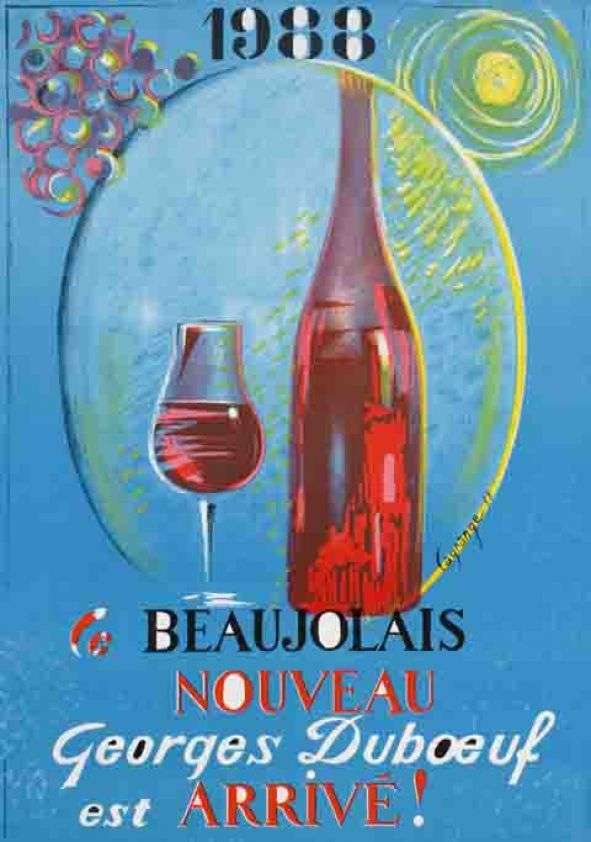
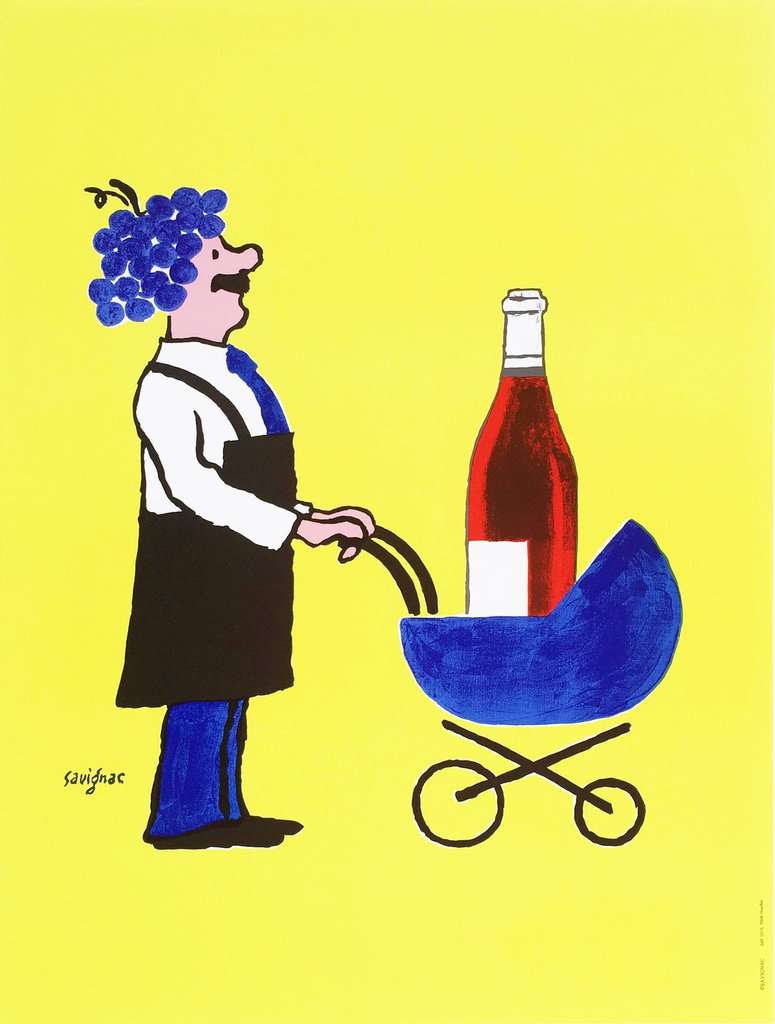
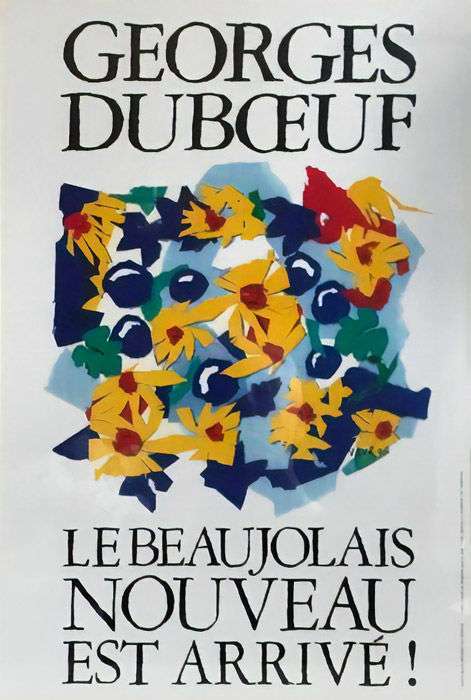
So how did Duboeuf and other wine producers tackle this marketing issue?
- Making a legend – Beaujolais Day is exceptional, and the wine has good qualities despite its “fragile age”.
- Introducing strict standardization – all 50 million liters of Beaujolais Nouveau produced annually must not only come from Gamay grapes, but they must be grown in the designated Beaujolais region of only 650 square kilometers. Additionally, they must be harvested by hand and need to undergo a special fermentation process.
- Building expectations – everyone knows when wine goes on the market and the races to deliver the first Beaujolais bottles to a specific country are part of the deal.
- Getting people to celebrate – even in its humblest period, Beaujolais was the wine to celebrate the end of the grape harvest. Today, we are too urbanized to be excited by the plights of vineyard workers, but we are happy to accept any occasion that creates pleasant emotions and gives us an excuse to declare the day worth celebrating.
Beaujolais nouveau is much more than a commercial success – it’s an example that marketing can take a rather ordinary but good product and propel it to the heights of international stardom.
Well, that’s it – a simple recipe to build up a brand’s profile through engaging storytelling. Plain and simple, huh? Tell it to Merlot and Cabernet producers!


