
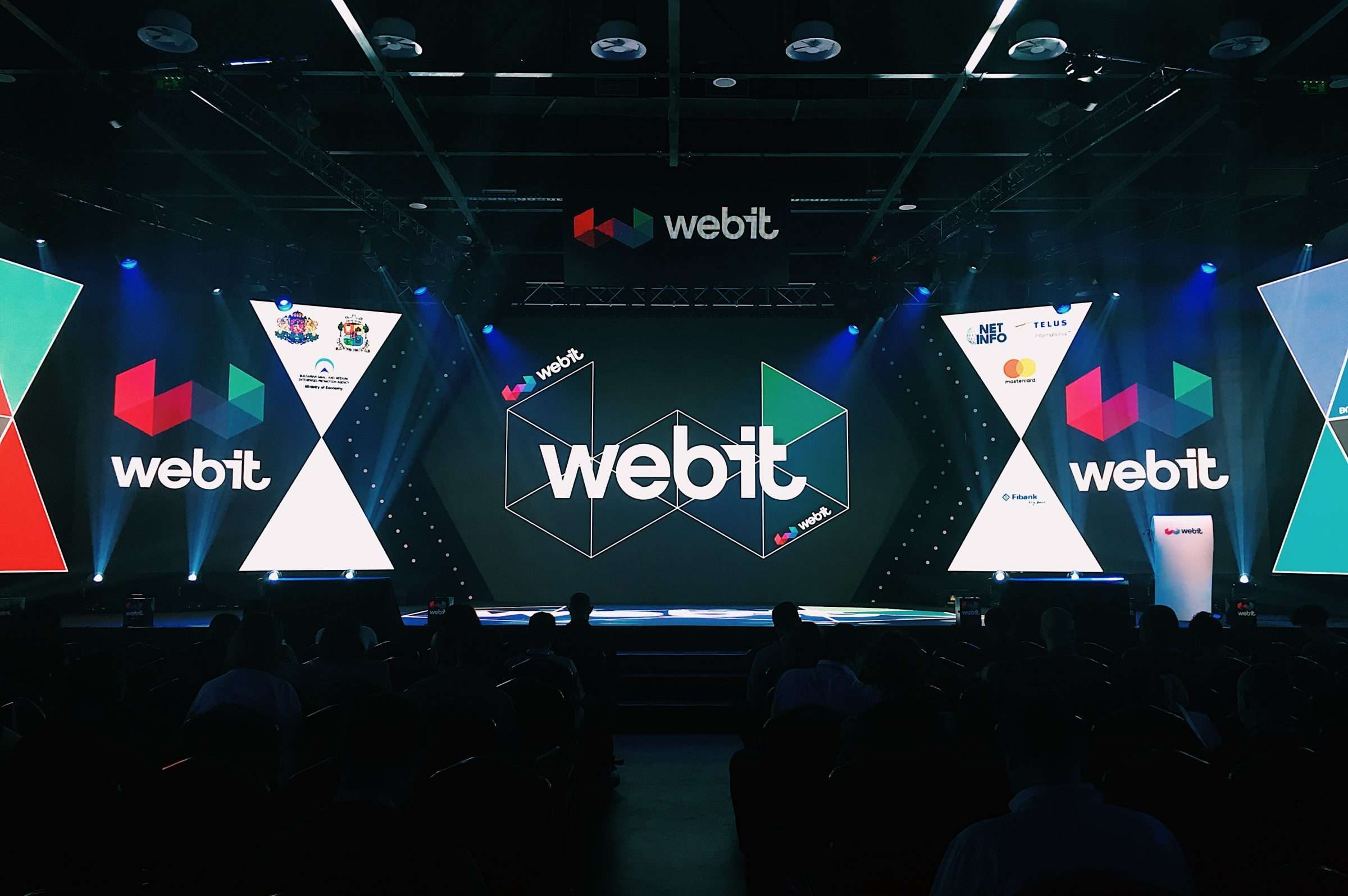
8000 characters – that’s the volume of my “shortened” notes from Webit Festival Europe. This event is taking on the challenge to gather the whole European digital industry in one place. You’ll find everyone there – from the newest startups to the most innovative government agencies.
Innovation in the digital world
The greatest takeaway from this year’s event was that, 10 years down the line, everyone seems to agree we’re not facing a digital transformation. We have already been digitally transformed. Now we need to continue developing our brands and businesses in the context of this brave new world. Here are some of the opinions on the world of tomorrow and marketing’s place in it.
Igor Beuker and the era of Math Men
According to Igor Beuker we’re moving from the Mad Men era to the age of Math Men – business owners who are focused on technology and invest in innovation. Take Amazon – the company’s annual innovation budget is 13 billion dollars. If they stop innovating tomorrow, traditional retail chains will need 6.5 years to catch up!
On the other end of the spectrum, we’ve got Unilever – a traditional company that needed to import innovation from the outside by buying Dollar Shave Club. In slow companies, innovation can only come from the outside.
[clickToTweet tweet=”Advertising may win quarters, innovation wins decades. – @IgorBeuker #webit” quote=”Advertising may win quarters, innovation wins decades. – Igor Beuker”]
Math Men have a strong sense of purpose. According to Jack Ma the goal of the Alibaba Group is not just making money. The company wants to give 10 million merchants the opportunity to be profitable, creating 100 million new work places in the process. What will happen if Ma manages to create “only” 60 million openings? Will we consider him a failure?
[clickToTweet tweet=”Math Men stick out their neck. They explore trends with an open mind. – @IgorBeuker #webit” quote=”Math Men stick out their neck. They explore trends with an open mind. – Igor Beuker”]
Paul Misener and the innovation of Amazon
But does innovation just happen? We heard more on that straight from the source – Paul Misener, the VP of Global Innovation Policy and Communications at Amazon. Innovation, it seems, thrives in the company of strict rules:
- The 2 pizza rule: Innovation teams must consist of 4 to 12 people at the most (or, as Jeff Bezos puts it, if a team can’t be fed with 2 pizzas, it’s too big). This ensures sufficient diversity of opinions, as well as good decision-making speed.
- The working backward doctrine: Every innovative idea starts its life as an imaginary press release and detailed FAQ. This aligns the team’s expectations. Then they create an action plan, starting at what needs to happen today to make sure the press release will actually be sent out in the future.
- Long-term focus: Amazon is not afraid to be misunderstood and to stay that way over a long time. Amazon Auctions failed, but then it grew into Amazon Marketplace, which now accounts for 50% of Amazon’s revenue.
- A culture of innovation: Teams are urged to experiment and it’s clear that sometimes those experiments will fail. This doesn’t mean they should stop trying.
[clickToTweet tweet=”Аny problem to be solved by a group that should be fed well by 2 large pizzas. – Paul Misener, Amazon” quote=”Аny problem should be solved by a group of individuals that should be fed well by 2 large pizzas. – Paul Misener, Amazon”]
Martin Wezowski and the optimistic future

The title of this presentation caught my eye even before the event day came: We will spend the rest of our lives in the future. Every person dealing with products, services, brands, businesses, should take this reminder by Martin Wezowski, Chief Designer at SAP, and pin it somewhere visible.
The world is changing faster. In the olden days, technological advancements were so significant we remembered each one. Our parents probably know when they watched color TV for the first time. I distinctly remember when I started using the Internet. Nowadays, those „moments of change“ come so often that they merge into a single „flow of change“.
Picture this: toys like Hello Barbie are using technologies that were only available to enterprise clients 5 years ago. Technological advancement is rampant, but our understanding of it is lagging behind. What will happen when this same toy gets an ad update and starts offering your child free burgers at McDonald’s? Or when its camera records a crime?
We need to put into specifics a bunch of ethical, moral and purely human issues. Empathy also unlocks great innovation potential. Human creativity will be needed and it’ll be augmented by the power of technology.
[clickToTweet tweet=”We conduct and orchestrate all new tech to create the future we want to live in. – @MartinWezowski” quote=”We are fusionists. We conduct and orchestrate all new technologies to create the future we want to live in. – Martin Wezowski, SAP”]
Chris Clarke and the pessimistic future
It’s great when speakers complement or contradict each other. Martin Wezowski showed us a positive view on the digital future, while Chris Clarke of DigitasLBi talked about the opposite.
Chris calls himself a „cheerful dystopian“ and I find this very fitting. His presentation covered many faults of the digital society:
- Large quantities of information make us less critical and help the onset of fake news.
- Segmentation technology leaves less control in the hands of users. You probably already know how big data helped Donald Trump win the elections.
- Personalization of search results and newsfeed content tightens the information bubble around a person. It doesn’t expose us to new points of view.
- We are witnessing much more rapid societal changes like premature deindustrialization. The phenomenon happens in less developed countries like India and China – they move straight from working the fields to developing software and providing services, without the industrialization era.
According to Chris Clarke we need to accept those dark sides of technology. This will help us move forward towards meaningful change. Brands and businesses will have a leading role in this transition. A couple of months ago 200,000 users deleted Uber because of the company’s political stance. Just several days before Webit, Pepsi was punished by the public for an ad that made light of public protests. This is proof enough that consumers expect serious political commitment from brands. We can’t just stay in the middle anymore, the future will favor brands leading true change.
[clickToTweet tweet=”If we recognize some of the darker sides of what we’re building, we have a chance to change it. – @albionics” quote=”If we recognize some of the darker sides of what we’re building, we have a chance to change it. – Chris Clarke”]
Aaron Harvey and authenticity
56% of Americans would stop buying brands they deem unethical. Aaron Harvey of Ready Set Rocket opened his talk with this stat and led the conversation toward authenticity. We saw a bunch of examples – headed by the current dark case from Pepsi. Those were all brands that try to plant themselves into current topics and fail miserably. The results are more than expected – harsh public outcry and worse customer relations.
[clickToTweet tweet=”Brands insert themselves in trendy conversations, but they should live the values every day. – @nuyakcity” quote=”Brands insert themselves in trendy conversations, but they should live the values in the day-to-day. – Aaron Harvey”]
On the other side of the spectrum stands Dove – an example of a brand that has a focused and stable approach to a public issue. The link between the brand and their real beauty cause is much more direct and authentic. That’s why it works. It’s the same when the outdoor store chain REI closed their stores on Black Friday. For this to work, a brand needs to work hard and truly understand the issue with all its ins and outs.
Graham McDonnell and storytelling
Authentic brands are best presented not with ads, but with interesting stories told through content marketing. The formula of a good story was revealed to us by the creative director of T Brand Studios (the content division of The New York Times), Graham McDonnell.

Most effective formulas tend to be incredibly simple. This one was no exception. It includes three key pieces:
- An element – the main character of the story.
- An obstacle
- A result
Here’s a simple example. The element is a young Dane prince, the obstacle is his treacherous uncle and the result is… OK, I won’t spoil “Hamlet” for you, you get the idea.
The above is the traditional storytelling formula. In content marketing, we usually present first the obstacle – the problem a user is facing. Then comes the element – the brand that works as a solution and leads everything to a positive result.
No matter what the story setup is, we need to make sure our tale is authentic and intriguing. Graham cited JWT in inspiring us to create content worth paying attention to.
[clickToTweet tweet=”We need to stop interrupting what people are interested in and be what people are interested in.” quote=”We need to stop interrupting what people are interested in and be what people are interested in. – Craig Davis, Chief Creative Officer, JWT”]
On a final note, according to Graham, the medium comes after the message. Think about the story first and then find the channel that suits it best. You can’t start doing content marketing with the idea “I want a video campaign”. That might not be the channel where your story will live to the fullest.
Robert C. Wolcott and proximity
In the digital world, brands are not only more authentic and more interesting, they must also be closer to the user. According to Robert Wolcott, the CEO of the Kellogg Innovation Network, now is the era of “proximity”. Here’s how he defines it:
One of the most powerful forces reshaping markets for the coming generation will be the production and provision of products and services ever closer to the point of demand. We call this Proximity. – Robert C. Wolcott, KIN
Most business people have at least heard about just-in-time production, but now we’re moving one step further. Amazon uses “anticipatory shipping” – their algorithms can sense when you’re about to buy something and forward the product to your closest distribution center even before you click and complete an order. It won’t be long before you’ll just be buying the copyright to 3D print a particular product in your local print shop.
My conclusion
It is very tempting, when faced with such information, to focus solely on innovative technologies. But I’d like to leave you with one last piece of advice by Roby Stancel of VCI. According to him, brands first need to focus on building trust. Tesla is an outrageously innovative company. It already has self-driving technology in its back pocket. But it can’t move forward unless users understand and trust the tech.
Our role as marketing people is to build that trust. How? By creating authentic two-way communication with our users, presenting them with engaging and valuable content. So what are you waiting for? Let’s start!
photos: personal archive and Webit Flickr


Comments
One response to “Webit: From the Digital Present to the Digital Future”
[…] Marketing is becoming more technical and the mindset of “I’m wasting half my advertising budget, but I’m not sure which half” is a thing of the past. We don’t need Mad Men anymore – we need Math Men. […]